The Secretary of State has asked the Chief Fire and Rescue Adviser, Sir Ken Knight, to provide an independent overview of progress with the fire investigations at Lakanal House, Havil Street, Camberwell on Friday 3 July. Sir Ken will report back to the Secretary of State on progress and emerging findings as a matter of urgency.
Sir Ken’s Terms of Reference for his report include the fire safety matters applicable to this building and operational procedures and practices undertaken by London Fire Brigade at this incident.
Until this work is complete I would appreciate your authority offering some reassurance to tenants.
There are practical measures that you could take such as reminding tenants how to protect themselves from fire, this includes having a working smoke alarm and regularly testing it. If tenants are concerned they can contact their local FRA and the Fire Kills website http://firekills.direct.gov.uk has plenty of up to date fire safety information.
Showing posts with label Chalcots. Show all posts
Showing posts with label Chalcots. Show all posts
Friday, 10 July 2009
Sunday, 7 June 2009
The Chalcots "Where Are We"
 CHALCOTS: With all what has been going on in Belsize with 133+ children in Camden without primary school places and the near collapse of the Government one may wonder what is happening to the Chalcots with "mould" and other serious problems reported in previous blogs.
So here is a timely update. After many high level meetings with Camden who still has yet to officially report back on all of the concerns raised by representatives of residents through the Housing and Adult Social Care Scrutiny and Hampstead DMC. Through the Operational Forum meeting, which meets monthly with representatives from all sides, it was stated by the PFIC CEO that on the question of “mould” that samples would be taken from THREE flats only and then for the rest of the 717 properties it would be up to the residents to report any re-occurring “mould” for a “TWELVE” month period.
This is in my opinion a disgrace, as I have stated in my previous blogs on “mould” and the problem of the “windows”, I feel that residents deserve better treatment.
I will continue to campaign for this better treatment and to receive acknowledgement that a serious problem exists.
I have received further news that I cannot yet blog about which is as vital and carries a significant H&S risk if unchecked. However, the implications of this particular matter which for legal reasons I cannot go into fully here presents a picture of a Camden Housing department which I have already stated for its failure to deliver "value for money", let alone quality of provision and adding to this an inability to monitor the capital works in the “regeneration” projects on matters of vital H&S standards. As soon as I am legally free to discuss these matters I will inform here in my blog fully the details. Rest assured however, that I will continue to actively campaign to get to the “truth” on these serious matters involving H&S standards.
Author: Nigel Rumble


Friday, 15 May 2009
UPDATE for the Public Meeting on Local Primary School Provision 14th May 2009
First impressions, having attended this important public debate at Swiss Cottage School.
Camden officers have together with Cllr Andrew Mennear, Executive of Schools agreed to explore the short-term options of additional temporary classrooms on the spare grounds of Fitzjohn's as suggested by Cllr Chris Philp and other local schools having sufficient grounds to accommodate extra temporary classrooms.
I managed to get some of my ideas heard, the first of using "Portacabins" style classrooms which can be assembled during the summer as a fast track "pragmatic" approach to meeting the immediate needs of the 133. The second of using parts of the large "green" spaces of the Chalcots in Belsize to build a “new” primary school. Naturally, any such scheme would require the active cooperation and consultation of all residents on the estate. This would be a more long-term solution, since consultation, planning permissions are time consuming processes.
The other very significant agreement to come out of the public meeting was that a “Working Group” would be set up to allow volunteer parents wishing to actively engage in working together with senior Camden officers to find and develop a short, mid and long term solutions at a regular “focus” group meeting to be set-up shortly.
As a parent myself amongst the 133. I know first hand how incredibly frustrating this problem is, being 31st in the waiting list for one of our preference schools!
Clearly, emotions were running high at the public meeting, for example, the one question I heard time and time again from the floor was “what are you ‘Camden’ going to do about this problem?” but everyone managed to stay well mannered and focused on the key issues.
Camden has stated that a summary of all questions asked will be circulated shortly to all attendees of this key meeting.
Author: Nigel Rumble 15th May 2009
Camden officers have together with Cllr Andrew Mennear, Executive of Schools agreed to explore the short-term options of additional temporary classrooms on the spare grounds of Fitzjohn's as suggested by Cllr Chris Philp and other local schools having sufficient grounds to accommodate extra temporary classrooms.
I managed to get some of my ideas heard, the first of using "Portacabins" style classrooms which can be assembled during the summer as a fast track "pragmatic" approach to meeting the immediate needs of the 133. The second of using parts of the large "green" spaces of the Chalcots in Belsize to build a “new” primary school. Naturally, any such scheme would require the active cooperation and consultation of all residents on the estate. This would be a more long-term solution, since consultation, planning permissions are time consuming processes.
The other very significant agreement to come out of the public meeting was that a “Working Group” would be set up to allow volunteer parents wishing to actively engage in working together with senior Camden officers to find and develop a short, mid and long term solutions at a regular “focus” group meeting to be set-up shortly.
As a parent myself amongst the 133. I know first hand how incredibly frustrating this problem is, being 31st in the waiting list for one of our preference schools!
Clearly, emotions were running high at the public meeting, for example, the one question I heard time and time again from the floor was “what are you ‘Camden’ going to do about this problem?” but everyone managed to stay well mannered and focused on the key issues.
Camden has stated that a summary of all questions asked will be circulated shortly to all attendees of this key meeting.
Author: Nigel Rumble 15th May 2009
Monday, 27 April 2009
"The Chalcots estate super-saver makeover" Says the Times Newspaper!
 "Flats in these four tower blocks get a whole new look for just £30,000 by United House"
I have just stumbled on this incredible story in Times Online, so as to be even handed I present the piece whole (everything in quotes is by the Times Author Kasia Maciejowska).
This piece reads almost like a glossy advertisement by United House as a PR exercise.
"Picture the upheaval involved in refurbishing one kitchen. Then multiply this by 439 and add in bathrooms, central heating, floors and windows that must also be modernised, everything being carried out to a strict budget. In this cost-conscious process, the price of a kitchen can be no more than about £3,000, a fraction of the typical six-figure outlay in a deluxe project such as the Rigby & Rigby house in Eccleston Street, Belgravia."
The Chalcots has 717 properties and even if you subtract the 110 leaseholder properties this gives 607 properties so where does Kasia Maciejowska get 439 from and what happened to the fifth tower block?
"You will then have some idea of the vast and challenging task undertaken every day by United House , the construction group that specialises in the regeneration of tower blocks and other council and social housing."
"You should also bear in mind that one prime objective of the work is the improvement of the energy efficiency of the homes - these have often not been modernised since the 1960s. Note too that only a few elderly or particularly vulnerable tenants will be moved into temporary accommodation for the period of the makeover, which can last for months. The rest remain in their homes and have a say in the proceedings: they are entitled to choose which colour schemes and finishes they prefer, for example. You may then be even more amazed at the good-natured enthusiasm of United House's staff. My impression from a day spent on site at the overhaul of the Chalcots estate in Swiss Cottage, North London, is that these workers always put the tenant first."
This is another incredible PR statement; there has been more complaints from residents in this project than any other comparable PFI project in recent years. The complaints run into the many hundreds, Estate blocks Tenant Representatives are busy chasing all the issues. Yes there have been some successful outcomes for some residents, but a substantial number have outstanding problems, which United House have yet to resolve.
"The £66 million Chalcots project involves recladding four 1960s tower blocks, each 22 storeys high, using weatherproof insulating aluminium and installing new bathrooms, kitchens, heating systems, windows and flooring and completely redecorating 439 out of the 660 flats. The work began in May 2006 and United House is on schedule to complete the project, part of the Government's Decent Homes programme for the improvement of social and housing assocation homes, by January 2010."
Here again we have complete story fabrication, the Chalcots comprises four tower blocks of same design and another of entirely different design. The buildings were completed during the period 1967 - 1968. The true cost of this PFI makeover "contract" is £150 million not £66 million as the Times article makes out. Also the project is not completing to "decent homes" standards but an entirely different protocol. In most cases much of the internals of the properties remain unchanged and undecorated from there 1968 appearance! Furthermore, on three buildings the "new" cladding system is de-laminating after only weeks of being erected by the PFIC. One building has so far been completely re-cladded and another two buildings are awaiting the same re-cladding exercise that will take two months each causing misery for residents.
"Given that the majority of United House's projects are ultimately publicly funded, financial efficiency is paramount. “There's no room for the bad weather excuses that are common in construction,” says Colin Dixon, United House's managing director. The company aims to complete the work on four flats every week (each flat takes 12 days to revamp)."
Complete rubbish, some flats have taken nearly two months to complete, some flats still have not been completed after one year of work.
"So how does United House meet its deadline and cost targets? To provide vast numbers of new kitchens and bathrooms with minimal errors and in a short space of time, it has a warehouse where the items required by each home - some bought in, others manufactured by the company itself - are packed together into individual units for each home. This enables the workmen to assemble the parts swiftly, minimising disruption to the tenants."
Many residents have had to have work re-scheduled multiple times because of unavailability of parts, making there internal disruption extend out to 6 or 8 weeks of work.
"It is a refurbishment production line that has been honed to near-perfection over the 44 years since United House began providing heating for council homes as Harp Heating."
The business of making money. It may be said has been honed out to perfection!
"Tower blocks are relatively easy to refurbish because the flats follow a regular pattern and the buildings are recent. However, in the 1960s, there was little concern for insulation. As a result of the refurbishment, the gas bill of one resident went down by £46 in the most recent quarter."
It is on record at official meetings, which I have attended virtually every one that these flats are a nightmare to work on as there was no thought given during there construction to a infrastructure re-fit. For the first one year of this PFI project hundreds of flats were converted into a virtual submarine by having visible 6 copper pipes for the central heating systems exposed all round the properties. After much protest this has been tidied up to a degree.
On the matter of improved insulation that it is reported by Times Author Kasia Maciejowska one resident's GAS bill is down £46 in the most recent quarter. This is complete hogwash since all residents in the "four" blocks pay for gas as a bulk gas supply from the Council and therefore pay a fixed "unmetered" charge. Only Blashford the "fifth" block that Kasia Maciejowska omitted previously have metered GAS. Yet again a tottaly misleading piece of information being reported!
In point of fact heating costs will be increased substantially by Camden over the next couple of years!
"Doing up period homes in Islington, which house many of the borough's council tenants, is considerably less predictable. United House has revamped 2,350 Victorian homes in Islington so far; each property has to be individually surveyed and its exterior preserved in an appropriate style."
Once again this is far from the truth, PFI Islington known as PFI 1 was beset with even worse problems than the Chalcots. The project reached such a low point that the entire PFI team of managers had to be replaced.
"Some local authorities employ United House directly and others fund the refurbishments through Private Finance Initiatives (PFIs). With PFIs, a bank or private lender funds the project and the Treasury repays the bank as the work is completed. Local authorities bid for PFI funding from the Treasury and companies, such as United House, then bid to the local authorities for contracts."
This at least is an entirely correct statement.
"Winning the contracts for these schemes is a slow process - it took three years to negotiate the Chalcots and the Islington contracts, but these were two of the initial six pilot schemes set up in 2003."
"While many developers struggle through the downturn, United House continues to grow. And as demand for social housing soars, it looks well placed to continue."
I have no reason to doubt that this is true, but at a high cost (stress) to the residents often getting sub-standard works with considerable disruption brought about by poor planning and management.
"Fact Box
Tenants can pick from five colour schemes; men like advice, women know what shades they want
The kitchens are designed around tenants' own appliances
The makeover process is democratic. At Chalcots, tenants voted for the large sitting room windows to be retained to keep the great views"
"Details: www.unitedhouse.net"
The author clearly says it all here.
I have felt it vital to set the record straight having read this piece written by the "Times", clearly its journalistic standard has dropped to a new low point. I will be more than happy to publish a reply from the Times editor, should it be sent to me here.
Written and edited by Nigel Rumble 27th April 2009
Article extracts originaly published in February 6, 2009
Tuesday, 20 January 2009
The PFI debacle in Camden Social Housing
 Five towers on the Chalcots were lucky to be selected for the £150M PFI retrofit 4 year makeover works, or at least the residents had hoped would be the case.
A different story is now slowly emerging that sets the tone of building problems to come over the 15 year PFI contract period.
Click photo left and you will just about be able to see the panels peeling off !
Question: What does a contractor do when faced with an output driven specification to deliver to a quasi "Decent Homes Standard".
You have probably guessed the answer already; build to that standard, especially as it only represents the minimum standards that builders can get away with.
The output specification is met and the client Camden is satisfied.
It now turns out that the cladding system and metal window system which only just meets the thermal insulation levels to pass current building standards is inadequate. As I have reported in previous blogs during the "cold winter snap" levels of condensation on the metal window frames have been unacceptable and black mould fungus has been popping up (mostly on the silicon sealant) everywhere in many of the resident homes during the past months, more are being reported to me every week.
I have started to dig around in the details of the window specifications themselves, it is clear to read that the windows used are the minimum specified by Schüco. That is not to say that the windows are bad but indicates that in the environment for which they have been installed is unsuitable.
All windows are made to a “thermal insulation” standard. A basic solid wood non-insulated frame provides about 1.4W/m2K. Double glazed glass with argon gas is rather better at 1.2W/m2K. (The lower the U value the better the insulation).
However, here is the rub the Schüco window frames installed on the Chalcots are around 3.9 W/m2K which represents a very poor level of thermal insulation. Which when you take into consideration the exposed nature of the “five” towers facing the Primrose Hill, leads to a thermally inefficient design that HAS already presented all the classic signs of high levels of cold bridge condensation on the metal frames.
As important is the increased energy costs to heat these new refurbished buildings, energy is basically going out the window and with it an increased CO2 footprint for Camden. Compared to what could have been achieved with improved insulation provision.
To add double insult to all the residents of the Chalcots, heating cost are set to increase by 13% over the year for Camden housing properties.
One of the key “selling features” that was used to get buy-in from the 717 resident homes was the fact that an energy efficient saving design was put forward.
Also the level of thermal cladding itself is only what has been described to me as a bare minimum, the architects HTA publicly state in press articles that their design concept is “London Borough of Camden is aiming to deliver a 30% cut in CO2 emissions”
When one considers that the original 40 year old buildings with high prevailing winds facing the Primrose Hill with no double glazed windows (using only one single sheet glass) literally losing up to 50% of heat through the old single sheet windows and cold concrete walls. Then 30% reduction represents only a small improvement of energy efficiency in the wider perspective.
Yes it is a welcome improvement but does it represent good value for a £150M PFI project that is the big question still to be answered.
Author: Nigel Rumble 20 January 2009
Monday, 29 December 2008
BLACK MOULD (FUNGUS) hits the Chalcots PFI £150M project
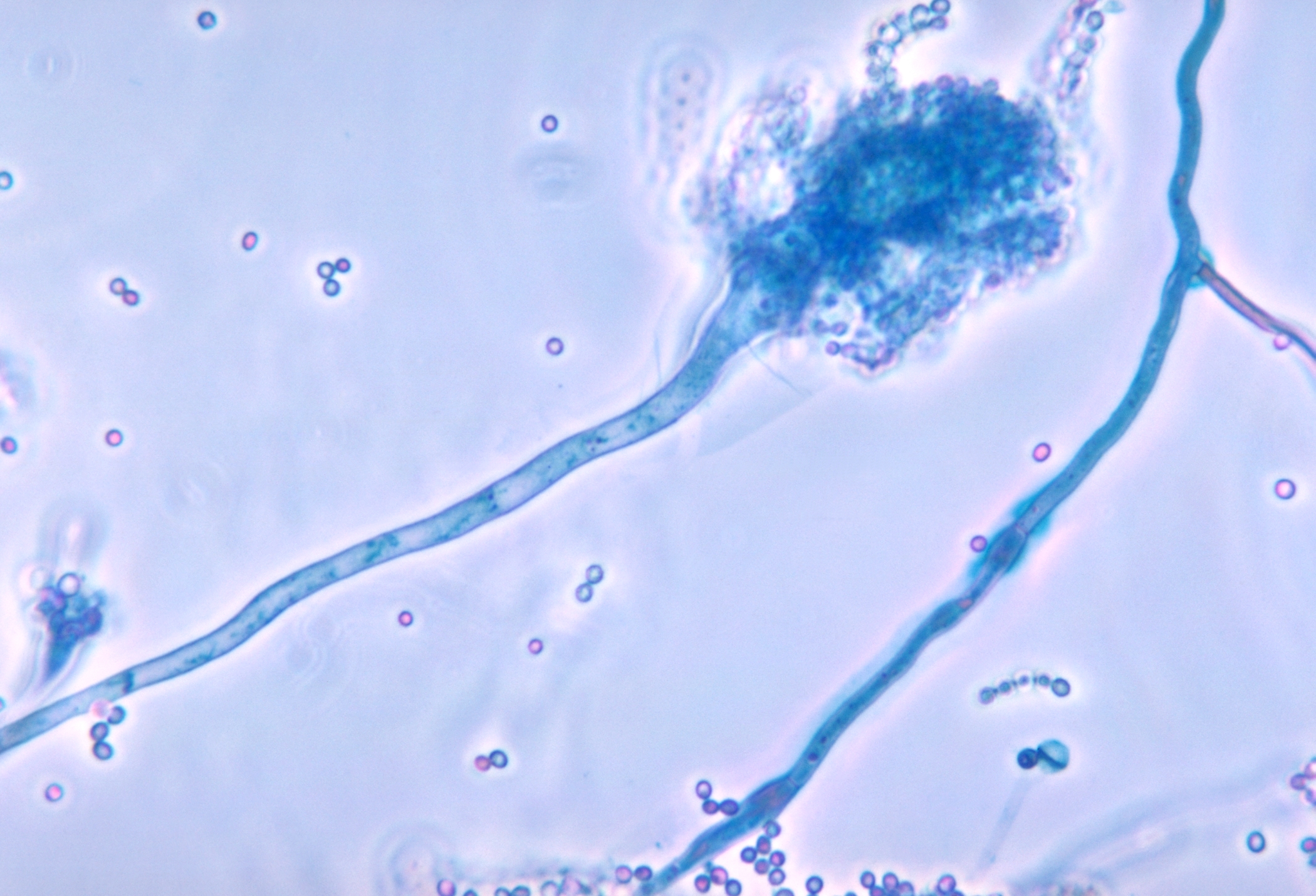 Black mould (Fungus) growing on the NEW window frames hits the £150M PFI "Chalcots" project. This serious and potentially hazardous situation has continued to become worse due to the moisture condensation during these cold and dump winter nights.
The new "state-of-the-art" window metal frames (with poor internal thermal insulation) conduct heat from the warm inside surfaces to the colder outside surfaces. Therefore, all the inside metal frame surfaces become very COLD which acts as a condensing surface for the moisture in the air of resident homes.
It is believed that the condensates (upto 50ml per window) which collects on the lower window frame and window ceils is responsible for the development of black mould spores in the "silicon" sealant, which appears NOT to be the "anti-fungicidal" type which would have helped to control these bacterial growths.
It will be asked at the next PFIC meeting that all 710 properties be checked and repaired to comply with building regulations and Health and Safety legislation of mould spore prevention.
It is widely recognised by medical experts that mould spores are responsible for potentially causing allergic reactions and respiratory problems. Some moulds also produce mycotoxins that can pose serious health risks to humans and animals. Exposure to high levels of mycotoxins can lead to neurological problems and in some cases death. The health hazards produced by mould have been associated with sick building syndrome.
If you are concerned and wish to know more Read Wikipedia here, APSNET
The thermal efficiencies of the NEW window frames is thus compromised by not having any thermal insulation properties, heat (energy) is being conducted straight out from all the window frames in this £150M PFI scheme, this energy conservation inefficient and poor design requires an investigation at the highest level.
PFI Contract info here
Author: Nigel Rumble
Tuesday, 16 December 2008
Chalcots PFI enters the Christmas shutdown
It is hoped as the £150M PFI "Chalcots" project enters the Christmas shutdown period that any emergencies such as lift breakdowns; etc will be dealt with the urgency that is required of buildings housing 161 properties.
Last year an emergency contact number was published and circulated that had a "out of service" number advising all callers "this line does not receive in-coming calls".
And on the Christmas Eve 2007, site lights for one of the buildings failed! So lets hope that this Christmas will be uneventful and all emergency protocols are in place.
Last year an emergency contact number was published and circulated that had a "out of service" number advising all callers "this line does not receive in-coming calls".
And on the Christmas Eve 2007, site lights for one of the buildings failed! So lets hope that this Christmas will be uneventful and all emergency protocols are in place.
Saturday, 6 December 2008
Health and Safety on the Chalcots
 The low levels of light to the entrance ways and underground car parking continues to be a very considerable concern to all residents in the vicinity of the Chalcots.
The situation has been currently under review for some time. Irrespective of whether the properties are responsibility of the PFIC group of companies or ultimately the Local Authority. It must be remembered that the Local Authority is the primary "Social Landlord" and the "Landlord" for all properties. Under Health and Safety Protocols and Security provision Protocols have a direct "Duty of Care" not only to all residents but also all residents in the Belsize area that may be affected as a "knock-on consequence" of the above mentioned low levels of lighting provision and inadequate security.
Friday, 5 December 2008
Common sense prevails at Camden's PFIC
 I reported yesterday "if you (Camden) don’t have temporary lights installed by the end of the next day (4/12) then I will take the matter to the local MP". Glenda Jackson MP was contacted. Senior officers of Camden and the PFIC were instructed.
I had an "official" walk-about yesterday with all the senior staff connected with the PFIC so they could see first hand the problem areas.
As of 8:45am today I can report that Bray now has the emergency temporary lighting asked. All that remains is that a permanent solution is found for the lighting problems.
Wednesday, 3 December 2008
Camden PFI Chalcots December 2008
 Where we are now in December 2008
Bray, the third of the five blocks making up the Chalcots estate is due to be signed off by the Independent Certifier (IC) 19th December.However, problems still remain in resident’s homes, such as leaking radiators, faulty windows and poorly regulated central heating controls, despite the IC sign off process. All the remaining problems will be transferred to the "snagging" process.Security remains a "key" concern of the residents at Bray and indeed the whole of the Chalcots.Inadequate lighting and no provision of a canopy to the entranceways continue to be a BIG concern for all residents.
Back in July 2008
I had written a summary of the “key” problem areas of the PFI process
1. Output Specification
2. Role of the Independent Certifier (IC)
3. Sign-off and snagging
Only the misapprehension of the role of the IC has now been addressed.It was hoped that with the correct levels of “direct” management pressure would the other issues have been addressed too.
Conclusion
Apart from the previous misapprehension that the role of the IC was to actually check all aspects of the finished “home” and check for essential Health and Safety certifications. We now know that the IC primary role is to sign-off, thereby starting the “unitary charge” process for release of “real” money from the PFIC bank to the contractor.
There is no real demonstratable change of the current implementation model.
It has to be said that PR skills have considerably improved on this PFI project.
I would also now add a new key "problem" PFI and non-PFI word to the list;
4. Communications
This refers to both the PFIC as well as the Local Authority, which are in many cases the worst offenders.
Tuesday, 2 December 2008
PFI at Chalcots - Third block due to complete

Bray, the third of the five blocks making up the Chalcots estate is due to be signed off by the Independent Certifier (IC) 19th December.
However, problems still remain in resident’s homes, such as leaking radiators, faulty windows and poorly regulated central heating controls, despite the IC sign off process. All the remaining problems will be transferred to the "snagging" process.
Security remains a "key" concern of the residents at Bray and indeed the whole of the Chalcots.
Inadequate lighting and no provision of a canopy to the entranceways continue to be a BIG concern for all residents.
Sunday, 30 November 2008
PFI IN CAMDEN – “The saga continues"
I have recently discovered members of the "PFIC - Partners For Improvement in Camden" do not include Camden.
This was believed to be the true:
http://www.internationallawoffice.com/deals/Detail.aspx?g=d4576c3f-25e4-da11-be7e-001143e35d55
But this actually is the true partner list:
http://www.partnershipsuk.org.uk/PUK-Case-Study.aspx?Region=London&SubRegion=Camden&Project=11978
This was believed to be the true:
http://www.internationallawoffice.com/deals/Detail.aspx?g=d4576c3f-25e4-da11-be7e-001143e35d55
But this actually is the true partner list:
http://www.partnershipsuk.org.uk/PUK-Case-Study.aspx?Region=London&SubRegion=Camden&Project=11978
PFI IN CAMDEN – “The Chalcot Experience”
History
PFI stands for Private Financing Initiative, the concept started for the first time in the UK back in 1992. I do not propose to go through a catalogue of success or failures of the concept here in this blog.
LBC has a very large portfolio of social housing stock with a mix of street properties of varying ages of around 90 years and 40 to 45 years for the concrete “estates” popular during the 1960’s.
In common with much of local authorities around the country these properties have not seen major refurbishment since having been built.
When government funding become available under the terms of PFI schemes, there was a headlong rush by many local authorities around the UK to enter into pilot schemes to test the water.
Islington PFI being one of the first in London to do so and Camden soon following close behind; there were discussions and meetings between Islington and Camden to explore common ground issues.
Whereas Islington PFI ventured a radical approach to outsource not only the construction and maintenance but also the day to day management of the social housing stock, Camden PFI on the other hand elected a more conservative approach of retaining full control of management of the housing stock and only outsourcing the “major refurbishment and maintenance” aspects to a PFI scheme.
The “Chalcots” was selected as being prime for the PFI pilot, due to the fact that the property was largely untouched and not re-furbished since being built in the period of 1965 to 1968.
The Chalcots historically comprised Dorney, Bray, Burnham and Taplow and was originally designed and built by the same group of property developers as the other Chalcots “town houses” which have always been private. It had been the original intention that the four “towers” would be luxury apartments with only three “large” apartments per floor.
However, during the building phase of these properties the “Ronan Point” collapse disaster happened 16th May 1968, concrete high rise become a dirty word and the “luxury” high rise funding went pear shape. Camden on the other hand was crying out for more housing stock and was offered to take the four “towers” over with minor conversions being conducted to the original three apartments per floor to the current seven properties per floor, made up of “two” three beds, “three” two beds, “one” one bed and “one” studio flat.
Blashford on the other hand was always conceived and built by the local authority and was not originally part of the “Chalcots” estate at all, only later was it appendaged onto the Chalcots “four” to become the Chalcots “five”
This therefore, is a quick summary of the history of the Chaclots estate.
PFI experience so far on the Chalcots
PFI started in early 2006, with the creation of PFIC (Partners For Improvement in Camden Ltd) Notice the similarity to PFI which many people mistakenly believed stands for PFI in Camden which is true except that Partners is a different beast all together to “pure” PFI.
The difference is in the small print. Partners have at its centre an executive management where Camden (the local authority) is ONLY the client.
In essence the concept is to outsource all refurbishment and property maintenance for the next 15 years of the scheme. Within the business contract agreements Camden the local authority approved an “output specification” which is the main driver for the project for the next 15 years.
Output specification
Before moving on any further it is important to understand exactly what “output specification” is and what it means for the every day lives of the residents of the Chalcots.
In simple terms the client has stipulated that all social housing stock is to be brought up to a standard consistent with the “decent homes” guidelines. How the principal partner contractor achieves that is a matter for the contractor to sort out using a combination of “best practice” and “value for money”
Herein is the first “key” problem, which is loss of control for the local authority, since in all cases that have been examined so far with resident property works related issues have all, centred on this lack of control.
However, due to the very large size of this PFI project (around £150 millions over the 15 year contract) an Independent Certifier (IC) has been commissioned.
Naturally, most people both at the local authority and the residents were made to understand that the principle role of the IC was to “check” and “pass” as fit all said works in a process what has come to be known as “signing off” a property.
Role of the Independent Certifier (IC)
Herein is the second “key” problem, this time born out of a “total” misapprehension of the role of the IC process and more importantly what the IC was commissioned to achieve on the “Chalcots” PFI.
So what went wrong here in this fundamental miscommunication that persisted for more than “one” year and the entirety of the “Dorney” episode.
It was assumed that the IC when inspecting properties checks quality of finished product, compliance to known building regulations, known H&S issues and adherence to the submitted building plan. Whether knowingly or unwittingly this understanding persisted for one year.
The reality is rather different, the true and principle function of the IC is to inspect around 10% of all properties to make sure that the delivered components such as new windows, central heating, kitchen, bathroom and toilet fixtures are in place to sign off the property on this basis for the release of what is known within the local authority finance circles as a “unitary charge”
In other words the IC is acting as a broker between the “Bank” of the PFIC and the principle contractor to receive its funding in a timely fashion but not before the said work is completed.
Completion and the “sign-off” stage of a property are the next issue that will be discussed.
Sign-off and snagging
What is sign-off if it does not refer to a completed product?
Herein is the third “key” problem, when is a property complete if not at the IC stage. This brings us to snagging.
It is normally understood that snagging is a part of the construction and building cycle. It is expected that when a rebuild of a property is undertaken such as installation of new windows, central heating, kitchen, bathroom and toilet that snagging will pick up faults that occur after sign-off that went undetected, that could not reasonably have been foreseen.
However, experience has shown on the Chalcots especially at Dorney, which has been signed-off that this is not the case.
It is demonstrably seen to be in fact standard practice to only install all said components of the re-build into a property seek an early sign-off and then deal with all commissioning and testing to final finish in the “snagging” stage.
Motivations
It is known that sign-off generates real money in the form of the unitary charge release (which has been estimated to be on average around £80,000 per unit tenant property, less for leaseholds), clearly it serves the principle contractor well to bank this money fast. 10 to 15 flats alone will generate nearly £1 millions and the daily bank interest yields here are considerable.
The construction phase accounts for nearly half of the £150 millions PFIC project the remaining half is for the maintenance part going up to the end point of the 15 year contract.
By allowing lots of sub-standard properties to be released (signed-off) means that more of this precious maintenance fund will be used at a “faster” burn rate into the early years of the maintenance cycle of the contract.
Therefore, there is a high probability and risk that the monies will run out well ahead of the 15 year contract (the phrase do it fast and get out fast has been in common day use by a multitude of people involved in this project).
Summary
Three main problem areas so far highlighted are;
1. Output Specification
2. Role of the Independent Certifier (IC)
3. Sign-off and snagging
Only the misapprehension of the role of the IC has now been addressed by direct communication to all at a recent Operational Meeting (OPFOR).
It is hoped that with the correct levels of “direct” management pressure will the other issues be addressed too.
Originally published by Nigel RUMBLE on 4th July 2008
PFI stands for Private Financing Initiative, the concept started for the first time in the UK back in 1992. I do not propose to go through a catalogue of success or failures of the concept here in this blog.
LBC has a very large portfolio of social housing stock with a mix of street properties of varying ages of around 90 years and 40 to 45 years for the concrete “estates” popular during the 1960’s.
In common with much of local authorities around the country these properties have not seen major refurbishment since having been built.
When government funding become available under the terms of PFI schemes, there was a headlong rush by many local authorities around the UK to enter into pilot schemes to test the water.
Islington PFI being one of the first in London to do so and Camden soon following close behind; there were discussions and meetings between Islington and Camden to explore common ground issues.
Whereas Islington PFI ventured a radical approach to outsource not only the construction and maintenance but also the day to day management of the social housing stock, Camden PFI on the other hand elected a more conservative approach of retaining full control of management of the housing stock and only outsourcing the “major refurbishment and maintenance” aspects to a PFI scheme.
The “Chalcots” was selected as being prime for the PFI pilot, due to the fact that the property was largely untouched and not re-furbished since being built in the period of 1965 to 1968.
The Chalcots historically comprised Dorney, Bray, Burnham and Taplow and was originally designed and built by the same group of property developers as the other Chalcots “town houses” which have always been private. It had been the original intention that the four “towers” would be luxury apartments with only three “large” apartments per floor.
However, during the building phase of these properties the “Ronan Point” collapse disaster happened 16th May 1968, concrete high rise become a dirty word and the “luxury” high rise funding went pear shape. Camden on the other hand was crying out for more housing stock and was offered to take the four “towers” over with minor conversions being conducted to the original three apartments per floor to the current seven properties per floor, made up of “two” three beds, “three” two beds, “one” one bed and “one” studio flat.
Blashford on the other hand was always conceived and built by the local authority and was not originally part of the “Chalcots” estate at all, only later was it appendaged onto the Chalcots “four” to become the Chalcots “five”
This therefore, is a quick summary of the history of the Chaclots estate.
PFI experience so far on the Chalcots
PFI started in early 2006, with the creation of PFIC (Partners For Improvement in Camden Ltd) Notice the similarity to PFI which many people mistakenly believed stands for PFI in Camden which is true except that Partners is a different beast all together to “pure” PFI.
The difference is in the small print. Partners have at its centre an executive management where Camden (the local authority) is ONLY the client.
In essence the concept is to outsource all refurbishment and property maintenance for the next 15 years of the scheme. Within the business contract agreements Camden the local authority approved an “output specification” which is the main driver for the project for the next 15 years.
Output specification
Before moving on any further it is important to understand exactly what “output specification” is and what it means for the every day lives of the residents of the Chalcots.
In simple terms the client has stipulated that all social housing stock is to be brought up to a standard consistent with the “decent homes” guidelines. How the principal partner contractor achieves that is a matter for the contractor to sort out using a combination of “best practice” and “value for money”
Herein is the first “key” problem, which is loss of control for the local authority, since in all cases that have been examined so far with resident property works related issues have all, centred on this lack of control.
However, due to the very large size of this PFI project (around £150 millions over the 15 year contract) an Independent Certifier (IC) has been commissioned.
Naturally, most people both at the local authority and the residents were made to understand that the principle role of the IC was to “check” and “pass” as fit all said works in a process what has come to be known as “signing off” a property.
Role of the Independent Certifier (IC)
Herein is the second “key” problem, this time born out of a “total” misapprehension of the role of the IC process and more importantly what the IC was commissioned to achieve on the “Chalcots” PFI.
So what went wrong here in this fundamental miscommunication that persisted for more than “one” year and the entirety of the “Dorney” episode.
It was assumed that the IC when inspecting properties checks quality of finished product, compliance to known building regulations, known H&S issues and adherence to the submitted building plan. Whether knowingly or unwittingly this understanding persisted for one year.
The reality is rather different, the true and principle function of the IC is to inspect around 10% of all properties to make sure that the delivered components such as new windows, central heating, kitchen, bathroom and toilet fixtures are in place to sign off the property on this basis for the release of what is known within the local authority finance circles as a “unitary charge”
In other words the IC is acting as a broker between the “Bank” of the PFIC and the principle contractor to receive its funding in a timely fashion but not before the said work is completed.
Completion and the “sign-off” stage of a property are the next issue that will be discussed.
Sign-off and snagging
What is sign-off if it does not refer to a completed product?
Herein is the third “key” problem, when is a property complete if not at the IC stage. This brings us to snagging.
It is normally understood that snagging is a part of the construction and building cycle. It is expected that when a rebuild of a property is undertaken such as installation of new windows, central heating, kitchen, bathroom and toilet that snagging will pick up faults that occur after sign-off that went undetected, that could not reasonably have been foreseen.
However, experience has shown on the Chalcots especially at Dorney, which has been signed-off that this is not the case.
It is demonstrably seen to be in fact standard practice to only install all said components of the re-build into a property seek an early sign-off and then deal with all commissioning and testing to final finish in the “snagging” stage.
Motivations
It is known that sign-off generates real money in the form of the unitary charge release (which has been estimated to be on average around £80,000 per unit tenant property, less for leaseholds), clearly it serves the principle contractor well to bank this money fast. 10 to 15 flats alone will generate nearly £1 millions and the daily bank interest yields here are considerable.
The construction phase accounts for nearly half of the £150 millions PFIC project the remaining half is for the maintenance part going up to the end point of the 15 year contract.
By allowing lots of sub-standard properties to be released (signed-off) means that more of this precious maintenance fund will be used at a “faster” burn rate into the early years of the maintenance cycle of the contract.
Therefore, there is a high probability and risk that the monies will run out well ahead of the 15 year contract (the phrase do it fast and get out fast has been in common day use by a multitude of people involved in this project).
Summary
Three main problem areas so far highlighted are;
1. Output Specification
2. Role of the Independent Certifier (IC)
3. Sign-off and snagging
Only the misapprehension of the role of the IC has now been addressed by direct communication to all at a recent Operational Meeting (OPFOR).
It is hoped that with the correct levels of “direct” management pressure will the other issues be addressed too.
Originally published by Nigel RUMBLE on 4th July 2008
Subscribe to:
Posts (Atom)